
When it comes to building an extension, garage or other outbuilding on your property, it can be difficult to choose between a modern flat roof and a traditional pitched roof. As they both differ considerably when it comes to aesthetics, material and functionality, it’s important that you choose the right option for your home. Ultimately, the choice you make will vary greatly, depending on a number of factors.
Those factors include: climate, budget, aesthetic preferences and how the space is going to be used. In this article, we’ll explain what a flat roof and a pitched roof are, alongside the advantages of both. This will, in turn, help you to make a more informed decision about which roof is best for your home. So, what’s the difference between a flat roof and a pitched roof? Let’s find out.
Before deciding whether or not you should choose a pitched or a flat roof, you need to know what they both are. Let’s take a closer look at the definition of flat roofs and pitched roofs:
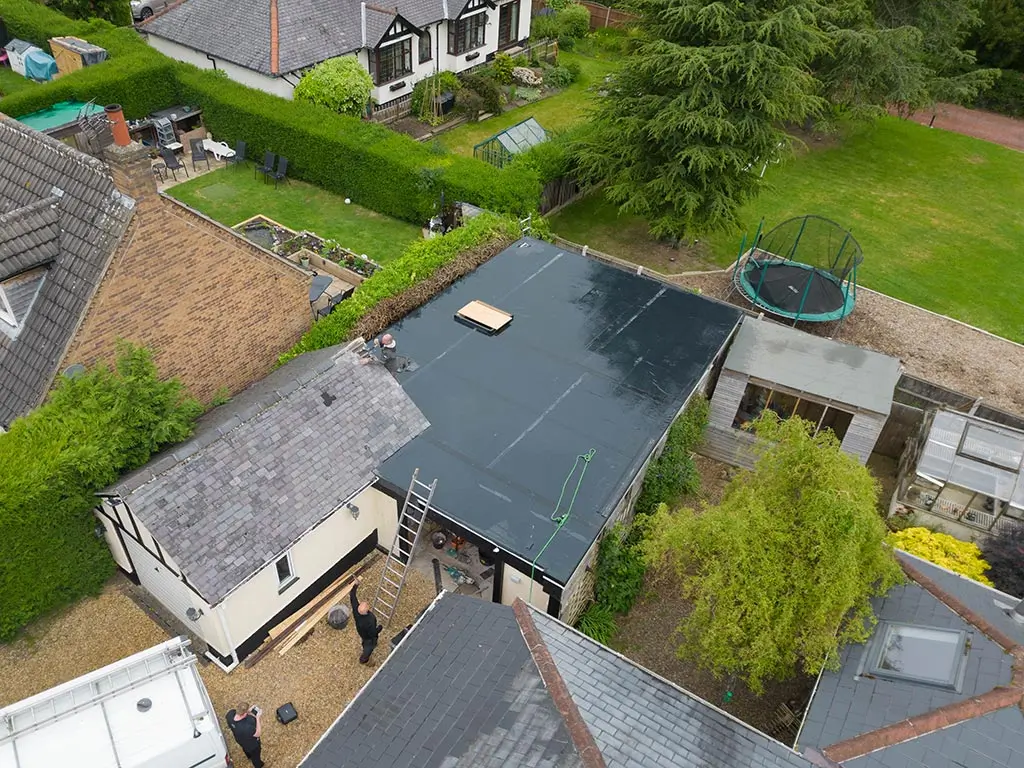
A flat roof is just that. A roof that is flat, but slightly sloped to allow for water runoff into drains and gutters. They’re often constructed using felt or rubber materials to ensure robustness and durability in all weathers. Flat roofs are often considered to be a modern yet affordable roofing solution for homeowners. This is the case regardless of whether it’s needed for a garage, extension or other outbuilding.
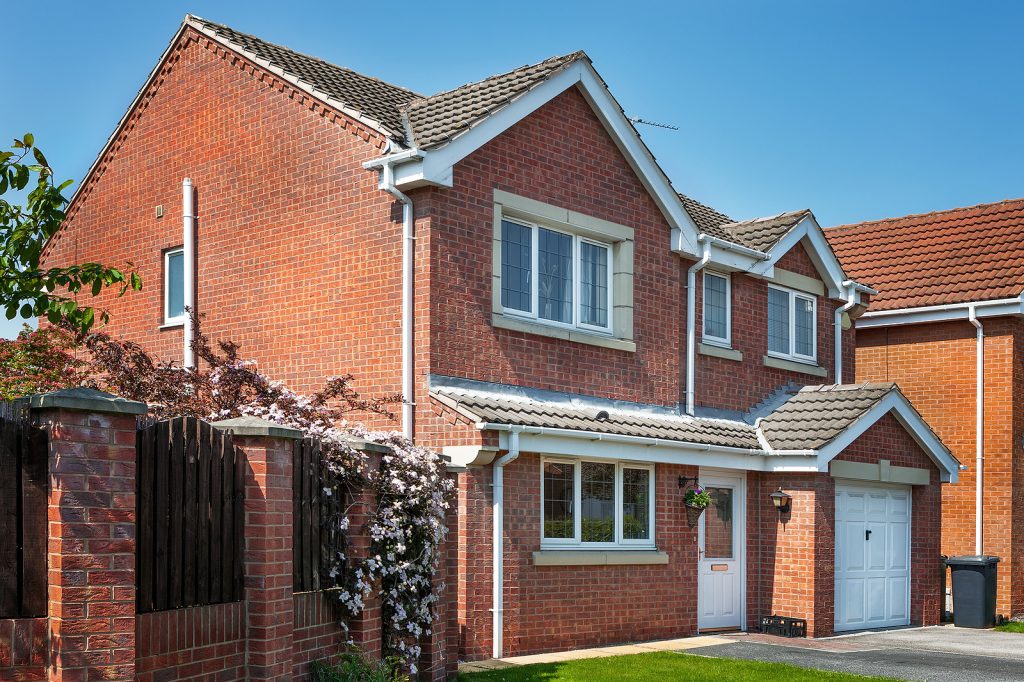
A pitched roof comprises two notable slopes that meet at the top of the roof. This forms a triangular shape from the front and back. It’s a traditional style of roof that’s often seen on residential homes, especially on properties that experience snowfall or rainfall on a regular basis. A great example would be chalets. Usually, pitched roofs are made using sheets that are made from slate or concrete, rather than using one sheet of either felt or rubber.
When it comes to the differences between pitched roofs and flat roofs, there are some notable features that one has over the other. We’re going to be delving deeper into the differences between a pitched roof and a flat roof:
A flat roof is almost level, with a slight slope to allow for water runoff when it rains or snows. A pitched roof, on the other hand, has two noticeable angles or slopes on it, resembling the shape of a triangle.
A flat roof allows water to drain off at a steady rate. But it needs to be installed by a professional to ensure its performance and integrity over time. A pitched roof also requires installation by an expert to allow for water to run off more quickly. The two slopes are steep when compared to those found on a flat roof.
Usually, a flat roof is more affordable when compared to pitched roof installation. This is because fewer, less costly materials are needed, and installation is relatively quick and efficient. The construction of a pitched roof, however, is more complex, and the materials needed are more expensive. As such, it’s generally more costly to have a pitched roof installed than a flat roof.
Arguably, a flat roof is far easier to maintain than a pitched one; this is largely down to its easy access. However, more frequent repairs may be needed to ensure integrity and functionality. Pitched roofs, on the other hand, are harder to gain access to, but less maintenance is required thanks to their complex construction and design.
When compared to pitched roofs made from either layers of slate or concrete, a flat roof made from felt cannot match the robustness of a pitched roof. However, flat felt roofs can still last for around twenty years, with the right maintenance. When constructed from rubber, they can last even longer.
It’s easier for flat roofs to be turned into an additional space for gardens or homes in general. People find it easier to add things like gardens, terraces, balconies or even solar panels to flat roofs. Pitched roofs, on the other hand, can only really be used for solar panel installation, and even then, the slope needs to face mostly towards the sun. Aside from this, pitched roofs cannot be used for anything else.
A flat roof is minimalist and modern in appearance. A pitched roof, on the other hand, has a more traditional and classic look. When it comes to choosing between a pitched or a flat roof for its appearance, it really does ultimately come down to your personal preference.
Again, there are some other things to consider before choosing between a flat or a pitched roof, and that includes looking closely at the advantages to be had by each. Weigh up what’s best for your individual situation and design preferences by looking closely at the benefits of both flat roofs and pitched roofs. But what are those advantages?
One of the main benefits of flat roofs is their appearance. They’re sleek and modern, yet practical and functional. Another advantage is that you can achieve a contemporary roofing solution in a way that is cost-effective and efficient.
This is because fewer, more affordable materials are needed, and installation is relatively quick and simple, but this can vary on a case-by-case basis. Another key benefit of a flat roof is that it comes with a level of usable space. Flat roofs can be easily transformed into gardens, terraces, balconies and solar panel platforms. This is what makes flat roofs so desirable in urban areas, where garden space may be lacking.
Finally, flat roofs are easy to maintain. This is largely down to their simple and relatively safe access. It makes maintenance, installation, repairs, and replacements far more convenient and time-effective.
Pitched roofs also come with advantages. It includes their durability and their unique ability to shed water, snow, frost and ice quickly. As well as rain, pitched roofs also allow for debris to fall off, but this often ends up in the gutters, meaning gutter cleaning is required more often.
However, this feature does reduce the risk of leaks and structural damage over time. In addition to this, a pitched roof can ensure better insulation and ventilation, which is why pitched roofs are often chosen to go over loft spaces.
The very fact that a pitched roof is used to construct loft space is a benefit in itself, as additional storage is available to homeowners. It also allows people to convert loft spaces into additional bedrooms, bathrooms and other living spaces. Finally, a pitched roof has a traditional aesthetic that’s considered to be somewhat timeless.
When it comes to choosing between a flat roof and a pitched roof, there’s no one-size-fits-all solution. The one you choose largely comes down to personal preference, budget, functionality and the maintenance required. Take a look back through this article and weigh up the differences and benefits of each to help you make an informed decision about whether a pitched roof or a flat roof is best for your home.
C
C
Amber Flat Roofing is a professional roofing company with a team of experienced specialists at the helm of everything we do. We’re able to carry out flat roof installation, replacements and repairs, as well as rubber roof, garage roof and fibreglass roof installations, replacements and repairs. If you’d like further information about how we can transform your outdoor space, restoring integrity and functionality to your roof once again, then get in touch with a member of our friendly, knowledgeable team today – we’re always pleased to hear from you.